

The war did not begin on February 28. It began years earlier, in a pattern of tit-for-tat escalation that both sides thought they could control.
October 7, 2023. Hamas, armed and financed by Iran, launched a devastating attack on Israel. Israel responded with military operations that continued for over a year. But Israel’s conflict was not just with Hamas. It was with an entire network. However, US intelligence and officials have concluded that key Iranian leaders did not have direct foreknowledge of the attack and did not orchestrate it.
As we know, Iran had built informal coalition called the Axis of Resistance. It was not a formal military alliance. It was a network of armed groups spread across the region. Hezbollah in Lebanon. The Houthis in Yemen. Palestinian groups in Gaza. Shia militias in Iraq. These were not Iranian armies. They were Iranian leverage.
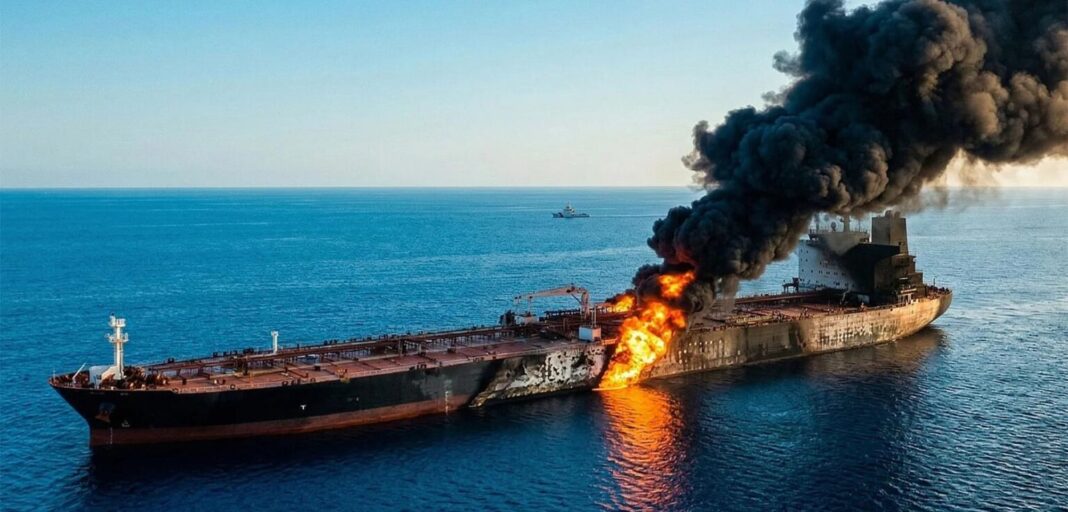
In April 2024, Israel struck Iran’s consulate in Damascus, Syria, killing senior Iranian commanders. Iran responded. In April and October 2024, Iran fired missiles directly at Israeli territory. Israel intercepted most of them. Both sides thought this was manageable. It was not.
The Twelve-Day War and Nuclear Fears
By June 2025, tensions escalated further. Israel discovered that Iran’s nuclear program had advanced beyond what Western governments considered acceptable. In June 2025, Israel launched what would be called the Twelve-Day War. It was not twelve days of combat. It was eight days of intense strikes, followed by four days of ceasefire negotiation.
The Israelis targeted Iran’s nuclear facilities at Natanz, Isfahan, and Fordow. They killed prominent nuclear scientists. They destroyed air defense systems. The US also struck Iranian nuclear sites on June 22, 2025.
Iran responded with over 550 ballistic missiles and 1,000 drones. By the ceasefire on June 24, approximately 935 fatalities (including 170 women and children) people had been killed in Iran, and 28 Israelis had died.
The Twelve-Day War proved something that would matter in February 2026. Israel could overwhelm Iran’s air defenses. Iran could strike back. But Iran’s defenses were penetrable. Its nuclear infrastructure was vulnerable. And the human cost of war in the region was measured in thousands of lives.
Everyone seemed to believe that after June 2025, negotiations could prevent a larger conflict. They were wrong about that.
The Final Months Before War
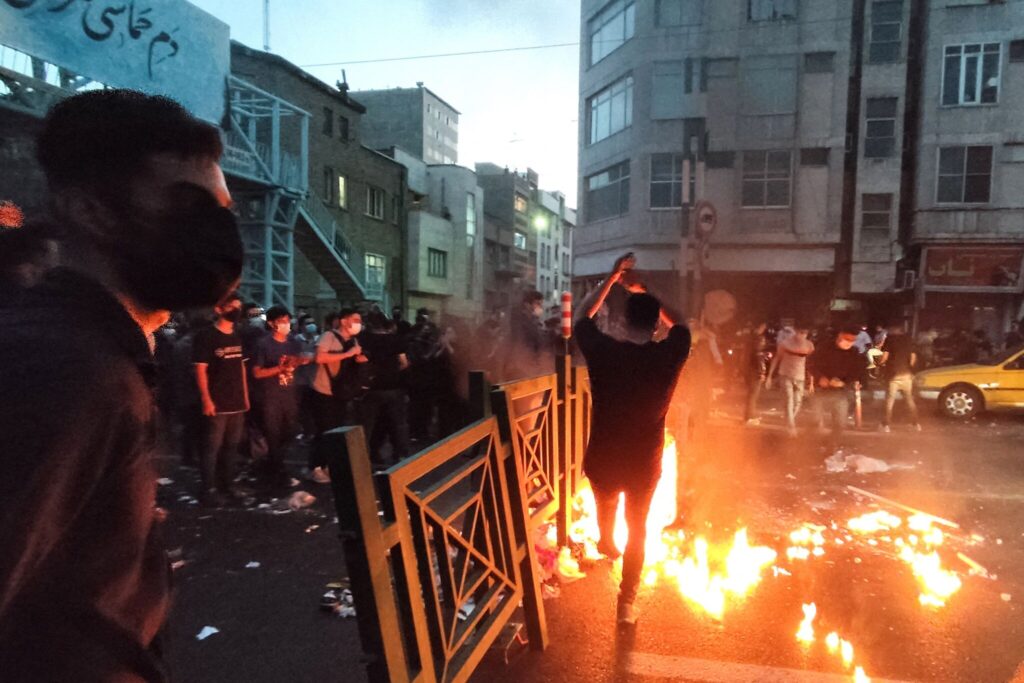
In January 2026, something happened inside Iran that few in the West initially understood. Iranians protested in the streets.
The protests began over inflation and economic collapse. But they became political. The government responded with violence. Security forces massacred thousands of civilians in their crackdowns. Demonstrations spread across Iranian cities. For the first time since the revolution, the regime faced the possibility of internal instability on a scale it had not seen before.
It was at this moment of Iranian weakness that Benjamin Netanyahu made his final push. The Israeli Prime Minister had spent nearly 20 years calling for regime change in Iran. He had visited Trump’s Washington repeatedly. In early February 2026, he made his case to Trump directly.
According to House of Commons briefings”, Trump for a joint military strike on Iran, specifically targeting its leadership. Netanyahu believed that Iran’s position was weakened. The window for action was open. Trump, after receiving intelligence briefings from Netanyahu, authorized Operation Epic Fury.
At the same time, behind the scenes, there were negotiations. In Oman, through diplomatic channels, Iran and the US were discussing a nuclear deal. The Omani Foreign Minister, Badr Albusaidi, said there had been substantial progress.
Iran had made an offer that Albusaidi described as completely new. For the first time, Iran agreed that it would never develop nuclear weapons. But Trump said he was not thrilled with the talks. He set a deadline.
And then, on February 28, before the talks were scheduled to continue in Vienna, the strikes began.
OPERATION EPIC FURY
The Opening Strike
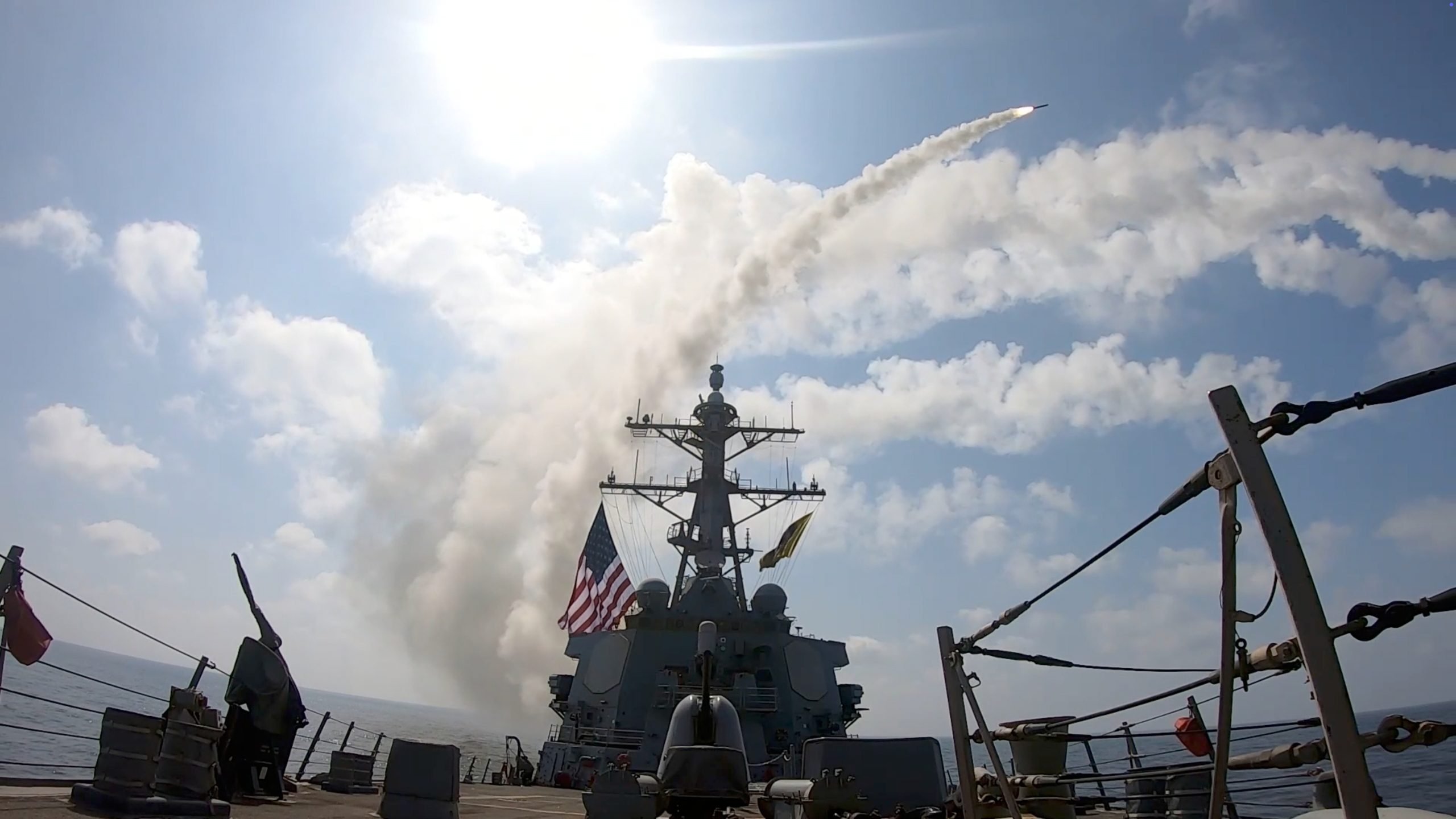
Operation Epic Fury began at dawn on February 28, 2026.
Nearly 900 strikes were launched in 12 hours. Two aircraft carrier strike groups. Scores of advanced aircraft. Tomahawk cruise missiles. Guided munitions. The US and Israeli militaries brought their full technological capability to bear against a single nation.
The targets were announced as military and nuclear installations. But the first target was Ali Khamenei. The Supreme Leader was meeting with advisors when the strike came. His compound was destroyed. His daughter was killed. His grandson was killed. His son-in-law was killed.
Within hours, Iranian state media confirmed his death. The government declared 40 days of mourning.
The secondary targets included Iran’s defense minister, Aziz Nasirzadeh. General Mohammad Pakpour, the head of the IRGC. The chief of staff, Mohammad Shiraz. Forty senior officials were killed, according to intelligence sources. The goal was clear. Decapitate the regime. Remove the leadership that had ruled Iran for a generation. Make it impossible for the government to function.
But on the first day, something else happened that would become part of the calculation.
A girls’ elementary school in Minab, near Bandar Abbas, was located adjacent to a military complex. The school was named Shajareh Tayyebeh. It was a place where children learned mathematics, persian and geography.
A missile strike hit the school. Iranian sources reported that 168 children were killed. Bodies of eight-year-olds, nine-year-olds, ten-year-olds were pulled from rubble by their parents. The United States acknowledged that the school was near a military target. It did not claim the strike was intentional. But the children were dead.
Over the next 40 days, similar calculations would repeat. By the ceasefire on April 8, Human Rights Activists in Iran, a US-based organization, documented 3,636 deaths in Iran. That included 1,701 civilians. At least 376 children had been killed. Seven infants. Hundreds of schools had been targeted or damaged. Fourteen medical centers were hit.
The pattern would repeat across the region. US and Israeli forces would announce they were targeting military infrastructure. The missiles would hit. Civilians would die. The numbers would be documented. And the war would continue.
Iran’s Response and Asymmetric Warfare
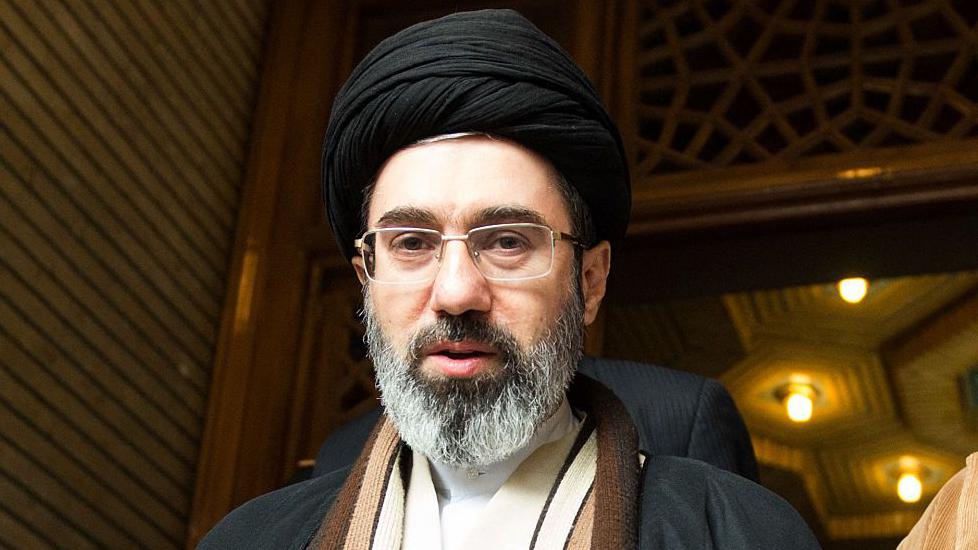
Iran’s response came within hours. Military commanders who had survived the opening strikes issued orders to strike back. The new Supreme Leader was Iran’s former president, Mojtaba Khamenei, the son of the assassinated leader.
Despite the chaos of leadership transition, Iran’s military apparatus functioned. This was partly because of something Iran had invested in for decades. It was called Mosaic Defense. It meant that command and control was not centralized. Every regional military unit had its own command structure, its own weapons, its own decision-making authority. If the top was destroyed, the pieces could still function.
On March 1, 2026, Iran launched its response. But Iran’s response was not conventional. It could not be. Iran did not have an air force that could match the US. It did not have a navy that could compete in open ocean. It did not have the budget, the technology, or the personnel for a conventional war.
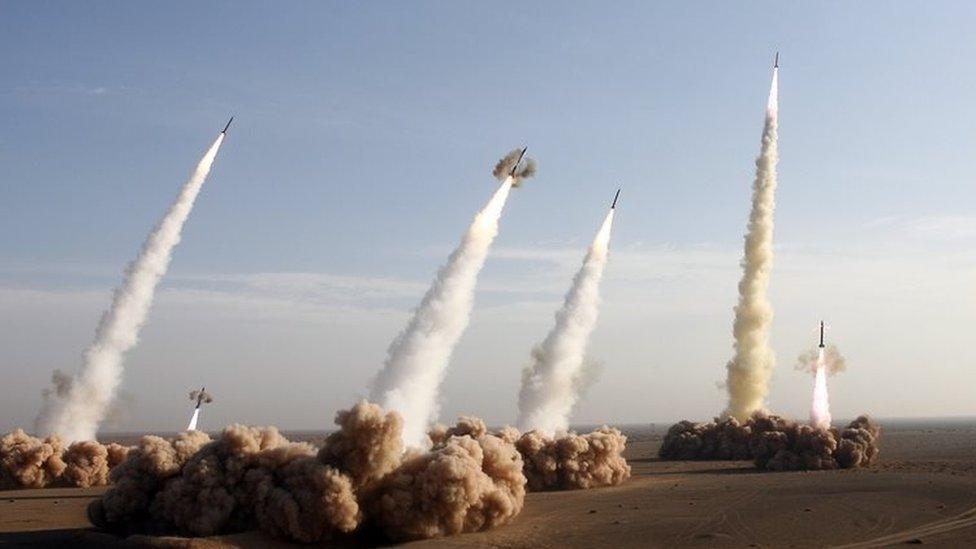
What Iran had was something else. It had ballistic missiles. It had drones. It had a network of proxies. And it had understood something crucial that would shape the conflict: how to impose costs using asymmetric warfare.
Between February 28 and April 20, Iran launched 1,471 ballistic missiles. These were missiles that cost between 300,000 to 1.5 million dollars to produce. They targeted US military bases in the region. They targeted Israeli cities. They especially targeted US-allied Gulf states.
But Iran also deployed something cheaper. The Shahed-136 drone.
A single Shahed costs approximately 20,000 to 50,000 dollars to manufacture. The United States and Israel responded with Patriot missiles. Each Patriot missile costs four million dollars. Each interceptor. Four million. To shoot down a drone worth 50,000 dollars.
When Iran launched large drone swarms, the math became impossible. The US reported it was spending 2 billion dollars per day in defense operations. Pentagon analysts warned of a critical problem: at this burn rate, the US could exhaust interceptor stockpiles in weeks.
This was asymmetric warfare in its essence. Iran could not win a conventional war. But it could make a conventional war unsustainable. It could deplete the very tools designed to defend against it. It could force the US and its allies into a calculation that no military had faced before. How long could you sustain defense costs of 2 billion dollars per day against an adversary willing to lose hundreds of cheap drones?
But there was another asymmetry. The human cost. In the conventional calculus, the US and Israel had the advantage. They had better air defense. They had superior precision. They could strike from above with minimal risk.
But from the ground, from bunkers, from dispersed facilities, from decentralized networks, Iran could ensure that when its territory was struck, people would die.
As of April 27, 2026, when the ceasefire had held for nearly three weeks, the casualty count was starkly asymmetric. Iran had lost approximately 3,400 people killed. Israel had lost 26. The United States had lost 13 soldiers in combat.
Behind each number was a person. A child pulled from rubble. A paramedic killed while responding to a strike on an ambulance. A woman killed running to a bomb shelter. A man killed by falling debris from a bridge he was celebrating on.
The asymmetry was not just military. It was human. When you are the nation being struck, when it is your hospitals and your schools and your bridges and your civilians who are dying, the calculus changes. The numbers become unbearable.
THE THREE Ms STRATEGY
- Munitions
As the war entered its second month, Iran’s strategy became clear. It was the three Ms. And the first M was Munitions.
According to Israeli Defense Force estimates, Iran began the war with approximately 2,500 ballistic missiles. By April, after 40 days of intensive warfare, that arsenal had been depleted to 1,500 to 2,000 missiles.
But Iran continued production. Secretary of State Marco Rubio estimated that Iran was producing 100 new missiles per month, despite the conflict. This was possible because Iran manufactures most of its own weapons systems. The Islamic Revolutionary Guard Corps Aerospace Force operates factories that produce ballistic missiles, cruise missiles, and drones.
The message Iran was sending was calculated. We can sustain this. We have the capacity to rebuild what you destroy. You cannot coerce us through military pressure because our military-industrial base is not dependent on foreign suppliers.
The problem was that this message was becoming less credible as the war progressed. Israeli and US airstrikes had targeted Iranian missile production facilities, launcher locations, and storage sites. Daily launch rates declined by 86 percent after the first week of combat. Iran’s assertion that it could sustain munitions production at pre-war levels proved difficult to demonstrate.
But Iran had one advantage that surprised Western military planners. It had developed hypersonic missiles. The Fattah-1 could travel at Mach 13 to 15 speeds. The Fattah-2 was designed to be nearly impossible to intercept.
These missiles had been combat-tested in the 2025 Twelve-Day War. They had been used again in the 2026 conflict. They represented a technological achievement that Iran had not been expected to accomplish.
This became part of Iran’s psychological messaging. We are not just defending ourselves. We are innovating. We are advancing our capabilities. You cannot assume that tomorrow’s Iranian missile will be the same as today’s.
Whether this was actually true or whether it was intended to plant doubt in the minds of planners in Washington and Tel Aviv became a separate question. But the message was clear. Munitions alone are not a sufficient strategy. But they create the foundation for everything else.
- Markets and the Strait of Hormuz
The second M was Markets. And this was perhaps Iran’s most effective weapon.
The Strait of Hormuz is a 34-kilometer-wide waterway between Iran and Oman. It is the only passage by sea between the Persian Gulf and the open ocean. Through this strait, 34 percent of global crude oil trade passes. Additionally, 20 percent of global liquefied natural gas transits this waterway.
On February 28, 2026, when the strikes began, the Strait was open. On March 4, Iran declared the Strait closed. Iranian naval forces, including the Islamic Revolutionary Guard Corps Navy, issued warnings to commercial shipping. The IRGC laid sea mines. It attacked merchant vessels. It announced that only ships from non-hostile states would be permitted to transit.
The effect was immediate. War-risk insurance premiums for shipping through the Strait increased dramatically. Within days, commercial shipping had collapsed. Where 3,000 vessels typically transited the Strait monthly, traffic dropped to 150 vessels. That is a 95 percent reduction.
As shipping froze, crude oil prices surged. Between February 28 and March 2, Brent crude oil jumped from approximately 60 dollars per barrel to 80-82 dollars per barrel. A 35 percent increase in four days.
The International Energy Agency characterized the disruption as the largest supply shock in the history of the global oil market. The head of the IEA described it as the greatest global energy security challenge in the history of the organization.
The economic impact rippled across the world. The Federal Reserve Bank of Dallas calculated that a one-quarter closure of the Strait would raise crude oil prices to 98 dollars per barrel and reduce global real GDP growth by 2.9 percentage points. In other words, a single nation closing a single strait would trigger global recession.
Fertilizer prices, which are heavily dependent on natural gas, surged 50 percent. This had consequences for agriculture in the Northern Hemisphere. The spring planting season was disrupted. Farmers reduced planting due to fertilizer costs. The consequence would be reduced global food production into 2027.
The Philippines, which imports 98 percent of its oil from the Middle East and generates 96 percent of its electricity from oil, declared a state of national energy emergency on March 24, 2026. Nepal announced that gas cylinders would be filled only halfway to extend supplies. Zimbabwe scrapped fuel import taxes and increased ethanol blending in petroleum to 20 percent. In the United States, gasoline prices spiked 1.16 dollars per gallon.
Iran understood that this was its leverage. It could not defeat the US military. But it could damage the global economy in ways that would hurt American voters at the gas pump. It could force Trump to calculate whether the political cost of continued war justified the objectives.
The closure of the Strait was not a temporary disruption. It was a statement of Iranian power. It was a statement that despite losing 3,400 citizens, despite having its nuclear facilities bombed, despite having its leadership decapitated, Iran still controlled something that mattered globally.
The Markets M was not about making money. It was about making the war expensive. Expensive for the global economy. Expensive for American consumers. Expensive for Trump’s political calculations.
- Midterms and Political Leverage
The third M was Midterms.
In May 2026, when negotiations were beginning in Islamabad, Pakistan, with diplomatic teams from both the US and Iran meeting under Pakistani mediation, the United States would hold midterm elections in November 2026. That was less than six months away.
Donald Trump understood the mathematics. In February 2026, polling showed only 21 percent of Americans supported strikes on Iran. Forty-nine percent saw the strikes as unnecessary and expensive. Thirty percent were unsure.
As the weeks progressed, the calculations worsened for Trump. The Strait of Hormuz remained closed, pushing oil prices higher. Gas prices at American pumps were approaching historic levels. Inflation, which had already been a concern, was being pushed upward by energy costs.
Voters’ primary concern was the economy. And the economy was deteriorating. The global disruption caused by the Strait closure was beginning to ripple through American supply chains. Manufacturing costs were rising. Transportation costs were rising. Consumer prices for food and goods were rising.
Trump faced a dilemma that political analysts at Chatham House and other think tanks began openly discussing. The war was politically unsustainable before the midterm elections. A prolonged conflict, weeks of continued strikes, months of Strait closure, all of this would damage Republican chances in November.
Iran understood this timing. The Iranian government, despite its own economic collapse and military losses, understood that it was negotiating with an administration that was increasingly constrained by electoral pressure.
On April 8, 2026, a ceasefire was announced. Both sides agreed to a pause in military operations. What followed were weeks of negotiations. Pakistan served as mediator. Multiple rounds of talks occurred in Islamabad.
The talks focused on five major issues. Freedom of navigation through the Strait of Hormuz. Iran’s nuclear program. Iran’s ballistic missile program. Reconstruction and sanctions relief. And a long-term peace agreement.
But what actually emerged in the negotiations was a pattern. Trump’s initial demands were hardening. He demanded Iran’s unconditional surrender. He set deadlines of March 21, then March 23, then April 7, for a deal. When deadlines passed without agreement, he threatened to resume strikes. He threatened to attack Iranian energy infrastructure and bridges.
But the threats became less credible as time passed. The administration could not sustain 2 billion dollars per day in military spending indefinitely. The political pressure from midterm constraints was becoming impossible to ignore.
WHAT EACH SIDE WANTED
Iran’s Demands
By late April and early May 2026, after six weeks of negotiations, it became clear that Iran and the US had fundamentally different visions of what a deal should look like.
Iran’s position was built on something simple. Iran had been struck first. Iran had lost 3,400 citizens. Iran had suffered massive damage to its infrastructure and military capabilities. Therefore, Iran believed the US and Israel should pay a price.
Iran’s demands centered on three things. First, a complete end to the war. Not just a ceasefire. An actual termination of hostilities. No threat of future strikes. No conditional arrangements. A full withdrawal of US and Israeli threat of military action.
Second, Iran demanded formal recognition of its sovereignty over the Strait of Hormuz. Before the war, the Strait was understood as an international waterway. After the war, Iran wanted to control it. Iran wanted the right to decide which ships could transit, at what cost, under what conditions.
Third, Iran demanded full sanctions relief. Every economic sanction that the US and other Western nations had imposed on Iran, Iran wanted removed. The argument was that Iran had endured decades of sanctions. The war was a consequence of those sanctions and decades of hostility. Therefore, sanctions termination was necessary for peace.
Additionally, Iran had a position on something that became crucial. The nuclear program. Iran insisted that its nuclear enrichment program was not up for negotiation. Iran asserted that as a signatory to the Treaty on the Non-Proliferation of Nuclear Weapons, it had the right to enrich uranium for civilian purposes.
Iran rejected any requirement to surrender its existing uranium stockpile or to accept limits on enrichment levels. Iran’s negotiators argued that the nuclear program was a sovereign right, not a concession to be bargained away. The 440 kilograms of uranium enriched to 60 percent that Iran had accumulated was, in Iran’s view, a matter of national security and national pride.
And finally, Iran made clear that its ballistic missile program was not negotiable. Iran’s position was unambiguous. The missiles are for defense. They will not be discussed. We will not reduce our missile arsenal. This is non-negotiable.
Iran’s delegation, led by negotiators from Iran’s Foreign Ministry, presented these demands as a 10-point proposal. They were presented not as maximalist opening positions, but as the minimal requirement for peace.
The US Position and Negotiating Terms
“The American position was vastly different. And it changed multiple times as the negotiations progressed.
Initially, the Trump administration outlined four core objectives. First, destroy Iran’s ballistic missile capabilities. Not limit them. Destroy them. Iran should not possess ballistic missiles capable of carrying nuclear warheads.
Second, dismantle Iran’s navy. Iran’s naval capabilities, particularly its asymmetric naval forces in the Persian Gulf, should be degraded to the point where they could not threaten US or allied ships.
Third, sever Iran’s support for armed groups across the region. The proxies, the Axis of Resistance, should be cut off from Iranian funding and weapons.
Fourth, ensure that Iran never obtained a nuclear weapon. This meant monitoring Iran’s nuclear program. This meant regular inspections. This meant verification that Iran was not enriching uranium beyond agreed-upon levels.
In late March 2026, the US delivered a 15-point proposal to Iran via Pakistan. The exact contents were not publicly released, but negotiators indicated it went beyond the four core objectives.
The most contentious issue was the nuclear program. Trump’s position, articulated repeatedly by Vice President JD Vance and Secretary of State Marco Rubio, was unambiguous. Iran must make an affirmative commitment that it will never seek a nuclear weapon and will never seek the tools that would enable it to quickly achieve a nuclear weapon.
More specifically, Trump demanded that Iran formally halt its nuclear enrichment program for a defined period. US officials, according to House of Commons briefings, wanted Iran to commit to a moratorium of at least 10 years. And Trump demanded that Iran turn over its existing stockpile of 440 kilograms of uranium enriched to 60 percent.
This created a fundamental contradiction. Iran said its enrichment program was non-negotiable. The US said Iran’s enrichment program must be ended. These positions could not be reconciled.
The second major contradiction was on ballistic missiles. The US initially demanded that Iran dismantle its ballistic missile capabilities. Iran said missiles were non-negotiable. The US could not demand that Iran surrender its primary deterrent. Iran would not agree to disarm.
But as weeks passed, something important happened. The US position shifted. By early May 2026, Secretary of State Marco Rubio was suggesting that perhaps the US had implicitly accepted Iran’s core demand. End the war first. Settle the Strait of Hormuz opening first. Leave the nuclear program for later negotiations.
This was a dramatic shift from Trump’s initial demands. It was not an explicit surrender of US objectives. It was a recognition that those objectives might not be achievable in the timeframe available.
The political clock was ticking. The midterm elections were coming. The Strait of Hormuz remained closed. Global oil prices remained elevated. The domestic political pressure on Trump was mounting.
Iran’s three Ms strategy was working, but not because Iran was winning militarily. Iran’s three Ms strategy was working because Iran understood the political constraints of its opponent. Iran understood that the longer negotiations continued, the more pressure would build on Trump to accept a deal that was less than what he initially demanded.
THE HUMAN COST
The Casualty Disparity
In war, numbers are often used to obscure reality. Casualty figures become statistics. Thousands become percentages. But behind each number was a human being. Each number represented a family. A loss. An ending.
By the end of April 2026, the casualty disparity between the two sides was stark and cannot be ignored.
Iran had lost approximately 3,700 people killed. Among them were 1,701 civilians. That means 50 percent of the Iranian dead were civilians. Fifty percent. The casualties included at least 376 children. Seven infants. Hundreds of children under the age of 18. By Human Rights Watch estimates, at least 15 percent of Iran’s total casualty count were minors.
In contrast, Israel had lost 26 people killed. The United States had lost 13 soldiers in combat. The disparity in human cost was more than 100 to 1.
This created a profound asymmetry in what the war meant to each side. For Iranians, the war was a catastrophe. Neighbors had been killed. Schools had been destroyed. The infrastructure of life had been damaged. Families had been shattered.
For Israelis and Americans, the war had been devastating in different ways. Fifty-four families had lost a loved one. That is devastating.
This disparity is important not because it makes one side right and the other wrong. This is not a moral calculus. This is simply an observation about the distribution of suffering. The burden of war had fallen far more heavily on one nation than the other.
And as negotiations continued, this disparity became part of Iran’s negotiating position. Iran argued that after suffering such loss, Iran was entitled to concessions.
WINNERS AND LOSERS
Military Victory
In military terms, the United States and Israel achieved their initial objectives.
They destroyed Iranian air defenses. They degraded Iran’s ballistic missile production capability. They damaged Iran’s nuclear facilities. They struck Iranian military infrastructure across the nation. They killed Iran’s Supreme Leader and 40 senior officials.
In these terms, the US and Israel won the military campaign. No US or Israeli airbase was captured. No territory was lost. No fundamental military capability was compromised. The campaign achieved its declared military objectives.
Iran, in contrast, lost the military conflict. Its air force was neutralized. Its air defenses were severely degraded. Its military leadership was disrupted. Its nuclear facilities were damaged. Its population suffered the most. Its military suffered estimated losses in the hundreds of millions of dollars.
In the traditional military calculus, measured in territory held, defensive capability maintained, and force protection, the US and Israel won decisively. Iran lost decisively.
But in war, military victory is not the same as achieving political objectives. And political victory is not the same as achieving strategic success.
Diplomatic Victory
In diplomatic terms, however, the outcome is more ambiguous.
The US entered negotiations demanding Iran dismantle its missiles, destroy its navy, cut all proxy ties, and never enrich uranium. By May 2026, it had backed down on all four. Missiles would be constrained, not eliminated. The navy would be ignored, not dismantled. Proxies kept operating. And zero enrichment became negotiated enrichment. Washington came in with maximalist demands. It is leaving with managed concessions.
In every instance, Iran’s position hardened after the war. Before the war, during the Oman negotiations, Iran had offered concessions. Iran had offered to agree never to develop nuclear weapons. But after the war, Iran felt stronger diplomatically, because it had survived the military campaign and because political pressure on Trump was increasing.
Why did this happen? Because Iran was negotiating from a position of desperation that had become a position of strength.
Initially, Iran faced an existential threat. Military strikes were destroying the nation. Civilians were dying. The government had been decapitated. Iran’s political position was so weak that accepting whatever terms the US offered might have been rational.
But Iran did not collapse. Iran survived the military campaign. And as Iran demonstrated it could continue operations despite the strikes, and as the war costs mounted for the US, the dynamic shifted.
Suddenly, Iran was negotiating with an opponent constrained by time. By elections. By economic pressure. By declining public support. Trump’s 21 percent support for strikes on Iran became even lower as weeks progressed. The political cost of the war was rising. And Iran understood this.
In diplomatic terms, Iran won the argument that it could not be coerced. The more the US struck, the more resistant Iran became to US demands. The coercion failed. And when coercion fails, the coercing power must move to negotiation. And negotiation favors the side that can wait longer.
Iran had learned long ago how to endure. The Iran-Iraq War taught Iran that survival is victory when the opponent has greater military power. Iran applied that lesson in 2026. Iran did not win militarily. But Iran did not lose diplomatically.
Overall Assessment
The 2026 Iran war produced no clear victor. It produced no clear loser. It produced something more complex.
Militarily, the United States and Israel accomplished their immediate objectives. Iran was degraded. Iran was damaged. Iran’s military capabilities were diminished.
But politically, Iran emerged with its core interests preserved. The Strait of Hormuz remained effectively under Iranian influence, at least temporarily. Iran’s nuclear program was not dismantled. Iran’s ballistic missile program survived. Iran’s proxy network continued to function.
The war was not a victory for Iran. But it was not a defeat. It was an endurance test. And Iran endured.
Meanwhile, the war proved enormously costly for the US. Not in lives. The US suffered 13 combat deaths. But in dollars. In global economic disruption. In domestic political cost. In international reputation damage.
Trump’s initial 21 percent public support for strikes on Iran became a strategic liability for his midterm election strategy. The war could not be won quickly. It could not be won cheaply. And it could not be won without costs that would damage Trump’s electoral prospects.
In those circumstances, negotiation became preferable to continued conflict. And in negotiation, Iran held cards. Iran held the Strait. Iran held the capacity to continue drone strikes. Iran held the ability to destabilize the region. And Iran was willing to use those cards.
The outcome reflects something profound about modern warfare between nations of vastly unequal military capability. The militarily stronger side has overwhelming tactical advantages. But the militarily weaker side, if it is willing to absorb enormous costs and if it understands its opponent’s constraints, can shape the outcome.
Iran did not win the war. But Iran was not defeated either. Iran merely survived or say, surviving And in the context of facing the United States, survival itself became a form of victory.
CONCLUSION:
The Uncertain Future
As of May 2026, the ceasefire held but negotiations remained deadlocked. Both sides said they wanted a deal, but they wanted different deals.
The Strait of Hormuz remained effectively closed. Commercial shipping had not resumed normal operations. Iran is controlling access, determining which ships could pass, and reportedly collecting tolls from those it permitted to transit.
Global oil prices remained elevated. Gas prices at American pumps remained high. Inflation continued to climb.
For Iranians, the cost would continue to mount. The economic damage to Iran’s infrastructure would require decades of rebuilding. The loss of life, concentrated disproportionately on civilians and children, would cast a shadow on an entire generation.
For Americans, the cost was measured not in body bags but in economic disruption, political division, and doubt about whether the military objectives justified the geopolitical consequences.
War is often presented as a binary outcome. Winners and losers. Victory and defeat. Triumph and tragedy
This war resists these categories. There was no clear victory. There was tremendous tragedy. There was no clear strategic clarity. There was only the reality that thousands died, millions were displaced, and the fundamental issues that caused the war remained unresolved.
When you live in a nation with superior military power, war becomes an option. It is a tool in the toolkit of statecraft. But when you live in a nation with inferior military power, war becomes a survival test. It is an ordeal that will determine whether your nation continues to exist.
And, the fundamental question remained unresolved. Had the war solved anything? Or had it merely postponed the inevitable confrontation for years to come, when Iran might be stronger or Trump will just end a whole civilization?